

Chocolate is one of the most loved desserts in the world. From cakes, truffles, and cupcakes to candy melts and bars, chocolate makes everything better. But what happens when you want to add beautiful colors to chocolate? This is where oil-based food coloring comes into play. Unlike regular food coloring, oil-based coloring is specially designed for chocolate, candy melts, and other fat-based treats.
In this guide, we are going to reveal the secrets of the best oil-based food coloring for chocolate. You’ll learn why oil-based coloring is essential, how it works, the top brands in the market, pro tips for using them, and answers to common questions. By the end of this article, you’ll be fully ready to take your chocolate decorating skills to the next level.
Why Regular Food Coloring Doesn’t Work with Chocolate
If you’ve ever tried adding liquid food coloring to melted chocolate, you may have noticed it suddenly turning lumpy, grainy, or hard. This happens because:
- Chocolate is oil/fat-based, while most liquid food colors are water-based.
- Water and oil don’t mix well.
- Adding water-based color to chocolate causes it to seize (harden and clump).
That’s why you need oil-based food coloring—it mixes perfectly with chocolate without ruining its smooth texture.
What is Oil-Based Food Coloring?
Oil-based food coloring is a special type of coloring made to blend with fat-rich products like chocolate, candy melts, buttercream, and cocoa butter. Instead of water, it uses oil or fat-soluble pigments that dissolve smoothly in chocolate.
Features of Oil-Based Coloring:
- Blends seamlessly with chocolate.
- Produces vibrant, even colors.
- Won’t cause seizing or clumping.
- Available in gel, liquid-gel, and powder forms.
Benefits of Using Oil-Based Food Coloring for Chocolate
- Smooth Finish – Chocolate stays glossy and silky after coloring.
- Vibrant Shades – You can create rich reds, blues, purples, and other colors that show well on chocolate.
- No Seizing – Since it’s oil-based, your chocolate won’t clump up.
- Custom Blending – You can mix colors to create custom shades.
- Professional Results – Perfect for cake decorators, chocolatiers, and home bakers.
Best Oil-Based Food Coloring for Chocolate – Top Brands Revealed
When searching for the best coloring for your chocolate projects, it’s important to choose trusted brands. Here are some of the most popular and reliable oil-based food colorings:
1. Chefmaster Candy Color
- Specifically designed for chocolate and candy.
- Comes in a wide range of colors.
- Highly concentrated, so only a small drop is needed.
2. Wilton Candy Colors
- Affordable and widely available.
- Comes in small pots.
- Great for beginners.
3. Colour Mill Oil-Based Food Coloring
- Premium quality with bright, bold shades.
- Loved by professionals.
- Works not just with chocolate but also buttercream and fondant.
4. AmeriColor Oil Candy Colors
- Known for consistency and smooth blending.
- Easy-to-use squeeze bottles.
- Vibrant pigmentation.
5. Magic Colours Oil Candy Colors
- Heat resistant and perfect for melting chocolate.
- Offers unique shades not found in all brands.
6. Powdered Oil-Soluble Colors (e.g., Artisan Accents, Roxy & Rich)
- Comes in powder form that dissolves into cocoa butter or chocolate.
- Perfect for airbrushing and detailed chocolate work.
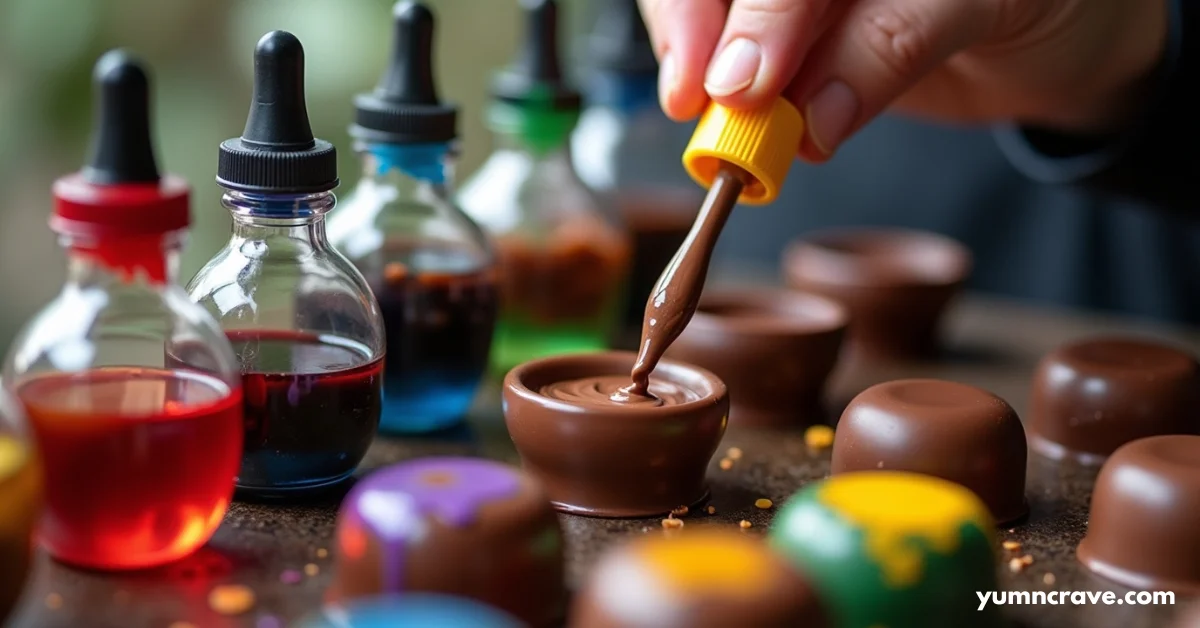
How to Use Oil-Based Food Coloring in Chocolate
Using oil-based colors is easy, but you need to follow a few steps for best results.
Step-by-Step Process:
- Melt Your Chocolate – Use a microwave or double boiler. Avoid overheating.
- Add Oil-Based Coloring – Start with a small drop or pinch (for powder).
- Mix Thoroughly – Stir until the color is evenly distributed.
- Adjust Intensity – Add more drops if you want deeper shades.
- Work Quickly – Chocolate hardens fast, so keep it warm if needed.
Pro Tips for Coloring Chocolate Like a Pro
- Always use a dry bowl and spoon—even a drop of water can ruin melted chocolate.
- Add color gradually—it’s easier to darken chocolate than lighten it.
- For pastel shades, mix in white chocolate first.
- For bold colors, use dark chocolate as a base.
- Store your oil-based colors in a cool, dry place for long-lasting freshness.
Popular Colors and What They’re Best For
- Red & Pink – Perfect for Valentine’s Day chocolates.
- Green – Ideal for Christmas trees, leaves, and festive designs.
- Blue & Purple – Great for baby showers and galaxy-themed desserts.
- Gold & Metallics – Adds luxury to wedding or celebration chocolates.
- Pastels – Beautiful for Easter eggs and spring themes.
Common Mistakes to Avoid
- Using Water-Based Colors – This is the #1 mistake that causes chocolate to seize.
- Overheating Chocolate – High heat can burn chocolate and ruin the flavor.
- Adding Too Much Color – Overloading with pigment can affect the texture.
- Not Mixing Well – Uneven coloring can lead to streaks.
Why Choose Oil-Based Food Coloring Over Other Options?
- Water-based colors → Cause seizing.
- Powdered colors (non-oil-soluble) → Won’t dissolve properly.
- Oil-based colors → Perfect match for chocolate.
If you’re serious about chocolate art, oil-based coloring is the only choice.
Creative Ways to Use Colored Chocolate
- Drizzle on Cakes and Cupcakes – Add vibrant drizzle designs.
- Chocolate-Covered Strawberries – Make them pink, gold, or pastel.
- Themed Candy Melts – Create rainbow pops for parties.
- Custom Molded Chocolates – Fill molds with different shades for unique designs.
- Holiday Treats – Red for Valentine’s, green for Christmas, orange for Halloween.
The Future of Chocolate Coloring
Food technology is growing, and more natural, plant-based oil colors are hitting the market. Expect to see:
- Vegan-friendly options (spirulina, beetroot, turmeric oils).
- Eco-friendly packaging.
- Health-conscious formulations (no artificial additives).
Final Thoughts
Adding colors to chocolate is an exciting way to make desserts look more professional and eye-catching. But the key secret is this: Always use oil-based food coloring for chocolate. It blends perfectly, prevents clumping, and gives you the vibrant shades you want.
Whether you’re a home baker or a professional chocolatier, investing in high-quality oil-based food colors from brands like Chefmaster, Wilton, AmeriColor, Colour Mill, and Magic Colours will change the way you work with chocolate forever.
So the next time you melt chocolate and think about decorating, remember this secret revealed today—oil-based food coloring is your best friend in chocolate art!
FAQS
Can I use gel food coloring for chocolate?
Regular gel colors are water-based and not suitable. You need oil-based gel colors.
Can I make my own oil-based food coloring?
Technically, yes, by mixing oil with powdered food-safe pigments. But it’s best to buy ready-made products for consistent results.
How do I color white chocolate?
Melt white chocolate, then stir in oil-based coloring gradually until you reach the desired shade.
Does coloring change the taste of chocolate?
High-quality oil-based colors are tasteless and won’t affect flavor.
Can I airbrush chocolate with oil-based coloring?
Yes! Mix powdered oil-soluble pigments with cocoa butter for smooth airbrushing.
