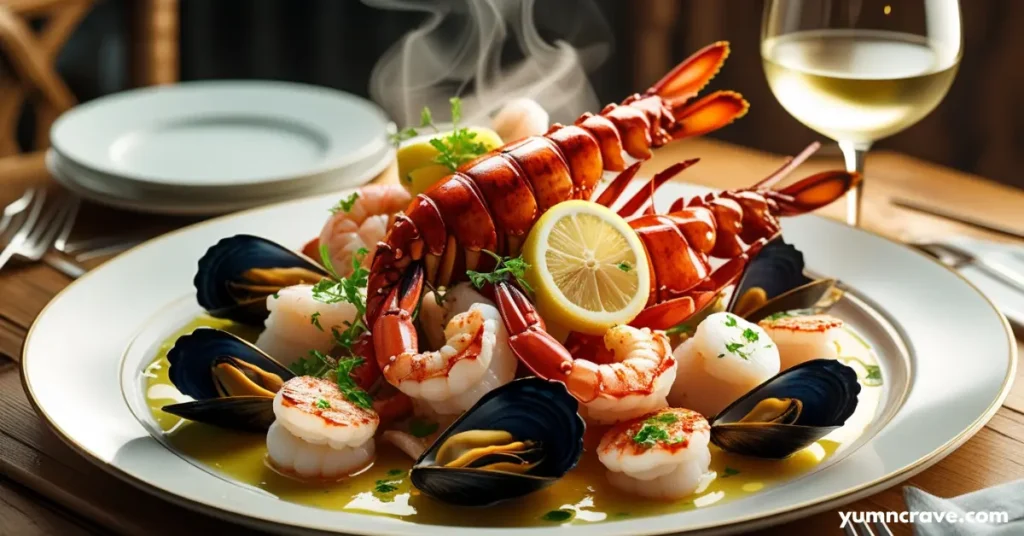
Do you ever wonder why restaurant seafood tastes so incredibly good? The fillet of fish is always flaky and moist, the scallops are perfectly seared with a golden crust, and the shrimp are bursting with flavor. You try to recreate these delicious dishes at home, but sometimes, the results are less than perfect. The fish sticks to the pan, the shrimp become rubbery, or a strong, fishy odor takes over your kitchen.
For a long time, I believed that making amazing seafood was a skill reserved for professional chefs with years of training. I thought there was some complex, mysterious technique I would never master.
But after spending years talking with chefs, fishermen, and home cooking experts, I discovered a fundamental truth.
The secret to perfect seafood recipes is not one single trick, but a simple, foundational principle that changes everything.
This secret is easy to understand, and once you know it, you will approach every piece of fish, every shrimp, and every scallop with newfound confidence. This knowledge is the key to unlocking a world of delicious, impressive, and healthy meals that will make you feel like a master chef in your own kitchen.
This complete guide will walk you through this core secret and all the supporting steps that guarantee perfection every single time. We will cover how to choose the best seafood, the essential preparation techniques, the must-know cooking methods, and how to combine flavors like a pro. Get ready to transform your cooking forever.
The One Secret That Changes Everything
So, what is this big secret? It’s simple, yet most home cooks overlook it.
The secret to perfect seafood recipes is starting with the absolute freshest, highest-quality seafood you can find and then cooking it with precise, high heat for a short amount of time.
Let’s break down why this is so powerful.
-
Freshness is Non-Negotiable: Seafood is incredibly delicate. Unlike a tough cut of beef that benefits from slow cooking, fish and shellfish are at their best when they are fresh. Fresh seafood has a sweet, clean taste of the ocean, not a “fishy” smell. That “fishy” odor is a sign of aging. When you start with a superior product, you are already 90% of the way to a perfect meal.
-
The Precision of Heat: Seafood proteins are very tender and have very little connective tissue. This means they cook very quickly and can go from perfectly done to overcooked and rubbery in a matter of seconds. Understanding how to apply high heat for a precise amount of time is the skill that protects your investment in that beautiful, fresh fish and delivers a sublime texture.
Everything else in this guide—the buying tips, the seasonings, the cooking methods—is built upon this foundation of Freshness + Precision.
The First Step: How to Choose the Best Seafood
You cannot create a fantastic seafood recipe with a low-quality ingredient. Knowing how to shop is your first superpower.
At the Fish Counter: What to Look For
-
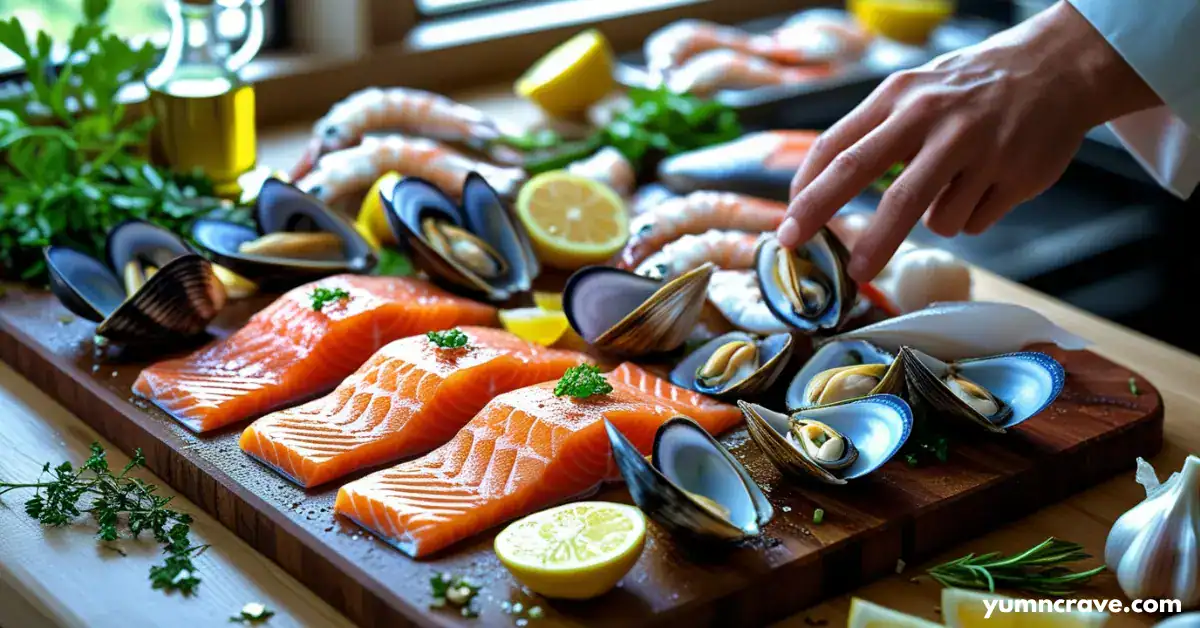
Whole Fish: Look for clear, bright, and bulging eyes. Cloudy or sunken eyes are a sign of age. The gills should be a vibrant red, not a dull brown. The skin should be shiny and metallic, with tight, gleaming scales. It should feel firm to the touch and smell like the clean ocean, not overpoweringly fishy.
-
Fillets and Steaks: The flesh should appear moist, glossy, and almost translucent. It should be firm and spring back when you press it gently. Avoid any pieces with gaps, discoloration, or a strong odor. There should be no browning around the edges.
-
Shellfish (Shrimp, Scallops, etc.): Whether fresh or frozen, they should smell fresh and briny, not sour. Shrimp should have firm bodies with shells that are intact. Scallops should be moist and have a creamy white or light pinkish color (avoid stark white scallops, as they may be soaked in water).
Frozen vs. Fresh: A Big Myth Debunked
Many people believe “fresh is always best,” but this isn’t entirely true for seafood. Much of the “fresh” fish at the grocery store was actually frozen on the fishing boat and then thawed for display.
Often, “frozen-at-sea” (FAS) seafood is of higher quality than “fresh” (previously frozen) fish. This is because it is flash-frozen within hours of being caught, locking in peak freshness. Don’t be afraid to buy high-quality frozen seafood—just be sure to thaw it slowly in the refrigerator overnight for the best texture.
The Essential Preparation: Setting the Stage for Success
Proper preparation ensures your seafood cooks evenly and absorbs flavor beautifully.
-
Patting Dry: The Most Important Step You’re Skipping
This is a critical step for getting a beautiful sear. Before your fish or scallops hit the pan, you must pat them completely dry with paper towels. Any surface moisture will instantly steam when it touches the hot pan, preventing that delicious, crispy, golden-brown crust from forming. A dry surface is the key to a perfect sear.
-
Bringing to Room Temperature
Take your seafood out of the refrigerator about 15-20 minutes before cooking. Allowing it to lose its chill means it will cook more evenly. If you put a cold piece of fish in a hot pan, the outside can overcook before the inside is done.
-
Seasoning Generously and Correctly
Do not be shy with salt and pepper! Season your seafood liberally on all sides just before cooking. Salt helps to enhance the natural flavor and, when applied just before cooking, helps pull moisture from the surface, aiding in that all-important browning.
Mastering the Cooking Methods: The Art of Precision
This is where we apply the “precision heat” part of the secret. Here’s how to master the most common methods.
1. Pan-Searing: For a Golden, Crispy Crust
This is the go-to method for fish fillets, scallops, and shrimp.
-
The Pan: Use a heavy-bottomed skillet (stainless steel or cast iron are best) that holds heat evenly.
-
The Heat: Get your pan properly hot over medium-high to high heat before adding anything.
-
The Fat: Add a high-smoke-point oil like avocado oil, grapeseed oil, or clarified butter. Wait for it to shimmer.
-
The Cook: Gently place your dried, seasoned seafood in the pan. DO NOT move it. Let it cook undisturbed for the majority of the cooking time. This is how you build the crust. You will know it’s ready to flip when the edges become opaque and it releases easily from the pan. For a typical 1-inch thick fillet, this is usually 3-4 minutes per side.
2. Baking and Roasting: For Hands-Off, Even Cooking
Baking is fantastic for whole fish, thicker fillets, or shellfish like shrimp.
-
The Temperature: A hot oven, between 400°F to 450°F (200°C to 230°C), is ideal. The high heat mimics pan-searing, cooking the seafood quickly and keeping it moist.
-
The Tool: A reliable instant-read thermometer is your best friend. For most fish, you want to cook it until it reaches an internal temperature of 135°F to 140°F (57°C to 60°C). At this temperature, the fish will be moist, flaky, and perfectly cooked. It will continue to cook a little after you take it out of the oven (this is called “carryover cooking”).
-
The Packet: Cooking “en papillote” (in a parchment paper packet) is a wonderful way to lock in moisture and steam the fish with its own juices and aromatics like lemon and herbs.
3. Grilling: For That Smoky, Outdoor Flavor
Grilling imparts a wonderful smoky flavor that pairs perfectly with seafood.
-
The Key: A clean grill and a well-oiled grate are essential to prevent sticking.
-
The Heat: Get your grill screaming hot. For fish with skin, place it skin-side down first and do not move it. Let the skin get crispy.
-
The Trick: For delicate fillets that might fall apart, consider using a grill basket. It makes flipping incredibly easy.
The Universal Sign of Doneness: The Thermometer Test
Forget the “flake with a fork” test, which can often lead to overcooked fish. The most accurate way to check for doneness is with an instant-read thermometer.
-
Salmon, Tuna, Swordfish: 125°F (52°C) for medium-rare.
-
White Fish (Cod, Halibut, Snapper): 135°F – 140°F (57°C – 60°C) for moist and flaky.
-
Scallops: Cook until firm and opaque.
-
Shrimp: Cook until pink and firm, with a C-shape.
Building Flavor: From Simple to Spectacular
Now that you have the technique down, let’s talk about flavor. The best seafood recipes enhance, rather than mask, the natural taste of the sea.
-
The Power of Fat: After cooking, finish your dish with a drizzle of high-quality extra-virgin olive oil, a pat of compound butter, or a spoonful of herb-infused oil. This adds richness and gloss.
-
Acidity is Your Friend: A squeeze of fresh lemon juice, a dash of vinegar, or a sprinkle of capers at the end of cooking can brighten all the flavors and cut through any richness. It makes the entire dish taste fresher and more balanced.
-
Herbs and Aromatics: Fresh herbs like dill, parsley, cilantro, basil, and tarragon are fantastic with seafood. Add delicate herbs at the end of cooking. Aromatics like garlic, shallots, and ginger should be cooked briefly to mellow their flavor.
Putting It All Together: A Sample Perfect Seafood Recipe
Let’s apply every principle we’ve learned to a simple, stunning dish.
Perfect Pan-Seared Salmon with Lemon-Herb Butter
-
Ingredients:
-
2 (6-ounce) salmon fillets, skin on or off
-
Salt and freshly ground black pepper
-
1 tablespoon avocado oil
-
2 tablespoons butter
-
1 clove garlic, minced
-
1 tablespoon fresh lemon juice
-
1 tablespoon chopped fresh parsley
-
Instructions:
-
Preparation (Freshness & Prep): Remove the salmon from the fridge 15 minutes before cooking. Pat it completely dry with paper towels. Season both sides generously with salt and pepper.
-
The Sear (Precision Heat): Heat the avocado oil in a stainless steel or cast-iron skillet over medium-high heat until it shimmers. Carefully place the salmon in the pan, presentation-side down. Resist the urge to move it. Let it cook for 4-6 minutes, until a beautiful golden-brown crust has formed.
-
Finishing the Cook (Precision): Flip the salmon. Add the butter and garlic to the pan. Cook for another 2-4 minutes, while tilting the pan and spooning the melted butter over the salmon continuously. For medium, cook until an instant-read thermometer inserted into the thickest part reads 125°F (52°C).
-
Building Flavor (Fat & Acid): Transfer the salmon to a plate. Immediately add the lemon juice and parsley to the hot butter in the pan, swirling to combine. Spoon this lemon-herb butter sauce over the salmon.
-
Serve: Serve immediately. You have just created a restaurant-quality dish using the secret to perfect seafood recipes.
Avoiding Common Seafood Mistakes
Even with the secret, it helps to know the pitfalls.
-
Overcrowding the Pan: This drops the pan temperature and causes the seafood to steam instead of sear. Cook in batches if necessary.
-
Constant Flipping and Poking: Let the heat do its work. Trust the process and leave it alone.
-
Skipping the Rest: Let your seafood rest for a minute or two after cooking. This allows the juices to redistribute throughout the flesh, just like with a steak.
Conclusion Seafood recipe
The journey to creating flawless seafood dishes is not about complicated recipes or secret ingredients known only to a few. It is about understanding and applying a simple, powerful framework.
The secret to perfect seafood recipes will always come back to the quality of your main ingredient and the precision of your cooking method.
When you combine fresh, high-quality fish or shellfish with confident, precise heat, you unlock a world of culinary potential. You no longer have to feel intimidated by the seafood counter or worry about ruining an expensive piece of fish.
You now hold the knowledge. You understand the importance of a dry surface, a hot pan, and the trusty thermometer. You know how to build flavor with fats, acids, and herbs. You are equipped to sear, bake, and grill with confidence.
So, head to your trusted fish market, pick up the freshest catch that calls to you, and apply this secret. Your next home-cooked seafood meal will not just be good—it will be perfect.